
New Jersey Sends Kids With Disabilities To Separate Schools More Than Any Other State
New Jersey sends kids with disabilities to separate schools more than any other state
New Jersey students with disabilities are the least likely in the nation to spend their days surrounded by peers without disabilities.
One underlying reason: a sprawling network of separate schools that allows districts to outsource educating them.
New Jersey has more than a hundred private schools, plus eight county-run districts specifically for students with disabilities.
Districts spend hundreds of millions of dollars placing students in private schools rather than investing in their own staffing and programs — placements that cost New Jersey taxpayers $784 million in 2024, not including transportation. That’s up from about $725 million the year before. This can create a self-perpetuating cycle that increases reliance on separate schools and, experts say, may violate students’ federal right to spend as much time as possible learning alongside students without disabilities.
In many cases, parents say school administrators are too quick to send children out of district and pressure families to agree to those settings. Other times, parents choose to send their child to a separate school, sometimes feeling that they have no choice after repeatedly failing to get their kids the help they need in their local school.
“Whatever it is that their kids need within the district, they’re not getting,” said special education parent and advocate Amanda Villamar, who works with families throughout New Jersey. “The question becomes: Why are these services in private schools and not necessarily integrated into our public school system?”
In all, about 30,000 students with disabilities in New Jersey — or 13 percent— attend separate private or public schools, according to The Hechinger Report’s analysis of federal data. That’s the highest percentage in the country. Nationwide, 4 percent attend separate schools.
New Jersey’s history of failing to include children with disabilities in public school classrooms dates back to the 1910s. That’s when the state began promoting separate schools for students with disabilities as a more humane alternative to barring them from schools altogether.
Nationwide, only 1 in 5 students with disabilities were enrolled in the public school system in the 1970s, when Congress passed the Individuals with Disabilities in Education Act or IDEA. The law enshrines integration by saying students with disabilities have a right to learn alongside students without disabilities to the “maximum extent” possible and that they should be placed in the “least restrictive environment.”
Across the nation, parents and children fought state laws excluding students with disabilities from public schools — with fights in Washington D.C. and Pennsylvania fueling the passage of IDEA. It wasn’t until 1992 that New Jersey repealed its statutes allowing public schools to exclude “untrainable” children with disabilities. By then, separate schools were an integral part of the state’s highly decentralized education system, which today comprises roughly 600 districts.
New Jersey Department of Education officials said the state is committed to ensuring students with disabilities are in the most appropriate school setting based on individual needs, and that includes out-of-district programs.
“New Jersey is uniquely positioned in this regard, with a longstanding infrastructure of out-of-district options and many small local public school districts,” department spokesman Michael Yaple said in an email. “These and other factors have contributed to the state’s historical reliance on a wide array of specialized programs designed to offer diverse, individualized educational options for students with disabilities.”
The rate at which New Jersey school districts place students in separate schools has declined over the past two decades. In the same period, however, more parents chose to send their children to private schools, sometimes because they felt they had no other viable options.
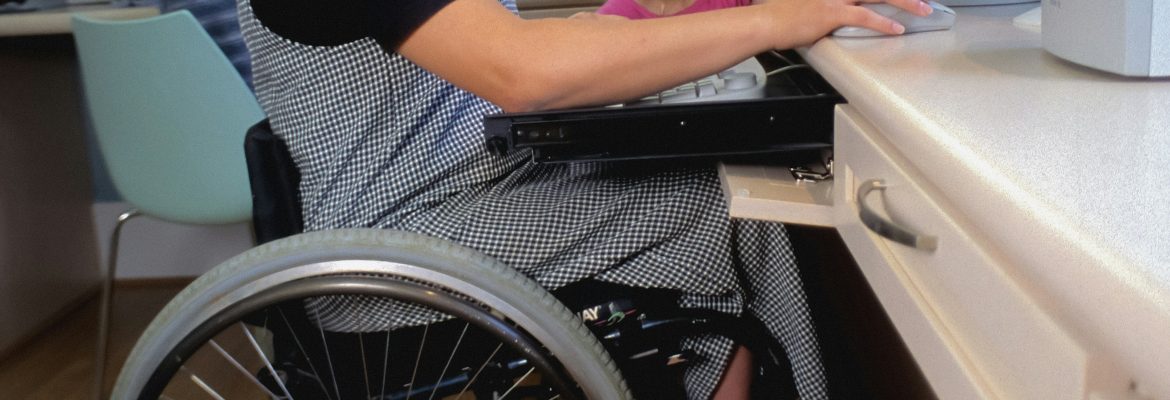
Banner Image: Kids with disabilities learning together. Image Credit – CDC

The Hechinger Report
We cover inequality and innovation in education with in-depth journalism that uses research, data and stories from classrooms and campuses to show the public how education can be improved and why it matters.
There are no comments yet
Why not be the first